Düsseldorf, Germany, April 28, 2026 (GLOBE NEWSWIRE) — .Ubitium GmbH today announced that its processor has successfully booted an off-the-shelf Linux operating system, making it the first Coarse-Grained Reconfigurable Array (CGRA) to execute Linux directly, without a host CPU. The milestone was demonstrated on an FPGA prototype ahead of the return of engineering samples from the company’s recent tape-out on Samsung Foundry’s 8nm process.
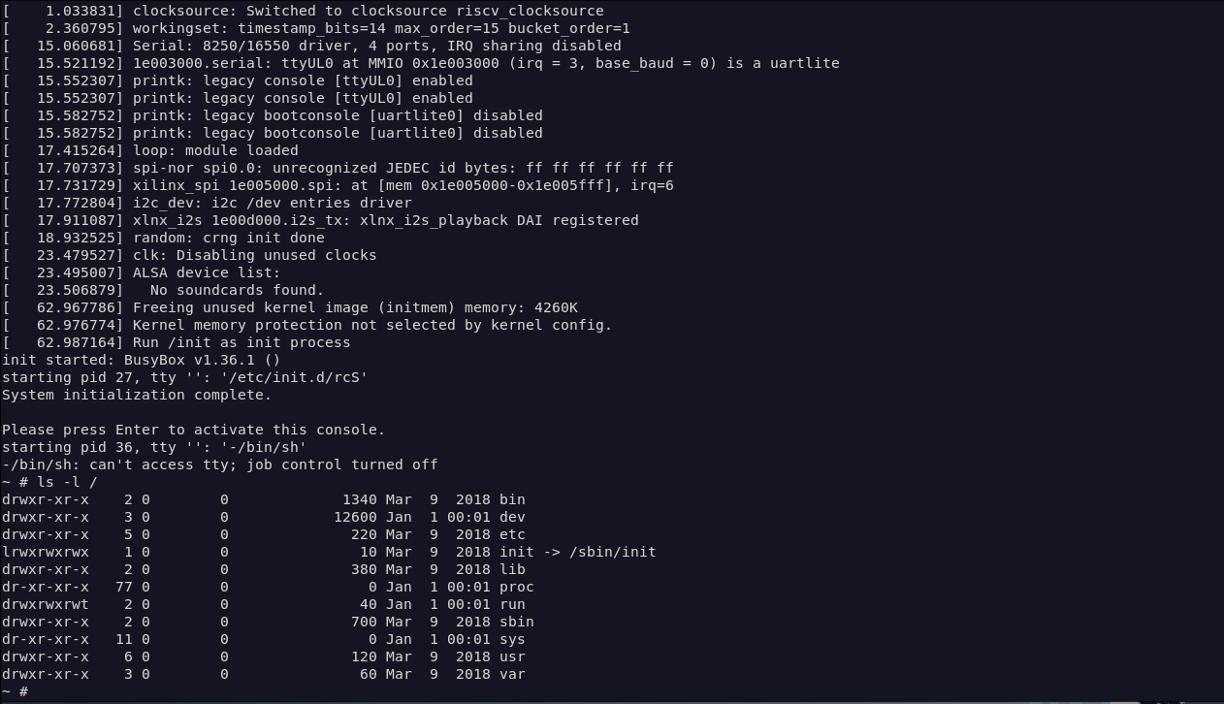
Ubitium Becomes the World’s First CGRA to Execute Linux Without a Host.
Until now, CGRAs have only ever appeared in computing systems as accelerators attached to a conventional CPU host. Linux, when present in such systems, ran on the host processor, not the CGRA. Ubitium eliminates the host CPU entirely: the CGRA is the processor.
Ubitium achieves this while delivering capabilities that conventional CPUs cannot. Its reconfigurable fabric enables simultaneous multi-threading across the processing array without requiring multiple processor cores, exploiting both instruction-level and thread-level parallelism at a level beyond conventional CPUs. Data-driven scheduling, where processing elements activate only when their operands are ready, substantially reduces switching activity and energy consumption compared to traditional CPUs. Ubitium processors are fully RISC-V compatible, meaning existing compilers and toolchains can be used without modification. Developers target Ubitium processors exactly as they would any RISC-V processor.
Hyun Shin Cho, CEO, Ubitium GmbH, commented: “We have demonstrated that a processor does not need a fixed microarchitecture to run a general-purpose OS. Ubitium reconfigures how it executes at runtime, achieving higher parallelism and lower energy than a conventional CPU, on the same software stack. That changes what is possible at the edge.”
Further data and details will be published upon receipt of silicon engineering samples.
The embedded computing industry carries enormous hidden costs: multiple processor vendors, separate software stacks, complex system integration, and supply chains exposed to disruption at every node. Ubitium’s universal processor addresses all of these at once. A single chip replaces the CPU, DSP, GPU, and FPGA, reducing component count, cutting development time, and giving product teams a supply chain with one architecture at its center. When requirements evolve, the processor reconfigures. The hardware does not need to change.
About Ubitium
Ubitium GmbH is a Düsseldorf-based fabless semiconductor company building the next generation of general-purpose processors. Founded by semiconductor veterans with decades of experience in reconfigurable computing, Ubitium’s processor architecture reconfigures its execution fabric at runtime, dynamically adapting to each workload rather than executing all code on a fixed pipeline. Fully RISC-V compatible, Ubitium processors work with existing compilers and software toolchains, enabling developers to access a fundamentally new hardware architecture with no porting effort. The company targets the fragmented embedded computing landscape across automotive, consumer electronics, industrial, and defence and space markets, where today’s systems rely on a complex mix of CPUs, DSPs, GPUs, and FPGAs. Backed by Runa Capital, Inflection, and KBC Focus Fund, Ubitium is headquartered in Düsseldorf, Germany. To learn more, visit www.ubitium.com.

For further information please contact the Ubitium press office: Bilal Mahmood on b.mahmood@stockwoodstrategy.com or +44 (0) 771 400 7257.