
Key Takeaways
- Oilfield truck drivers in the Permian Basin typically begin their day between 3:00 and 5:00 a.m. with mandatory pre-trip inspections before receiving their first dispatch assignment.
- Waiting at load facilities and wellsites is a standard part of the job and must be properly logged as on-duty time under FMCSA hours-of-service rules.
- Owner-operators can gross $5,000-$9,000+ per week, but net take-home after fuel, insurance, maintenance, and truck payments typically lands between $1,000 and $3,000+.
- Entry requires a Class A CDL with tanker endorsement, PEC/Safeland training, H2S awareness certification, and ELD compliance.
- Carrier selection — including dispatch model, pay transparency, and load consistency — is one of the most consequential business decisions an owner-operator can make.
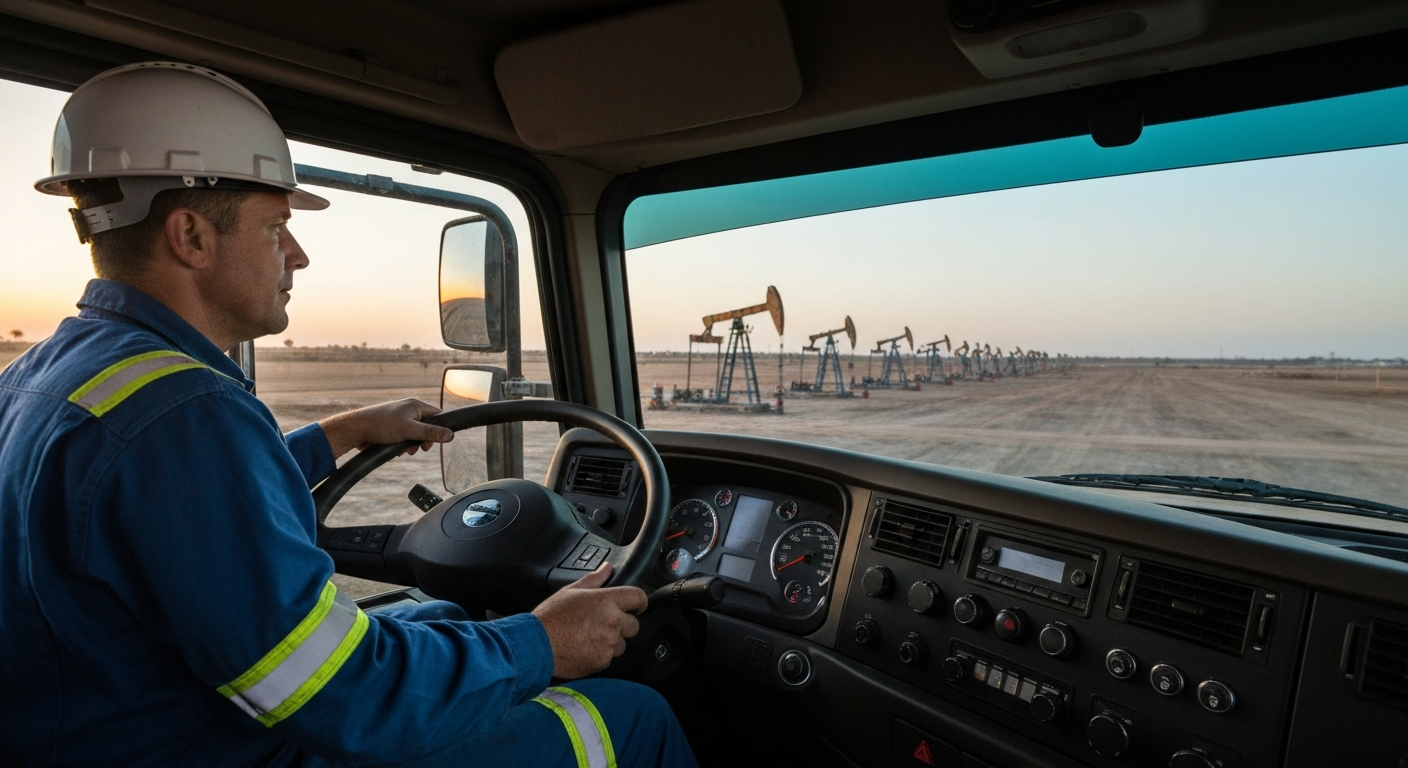
Oilfield trucking is not a conventional driving job. In the Permian Basin, owner-operators often work long shifts that combine transportation, safety compliance, communication, and time management. While the work can be demanding, it also supports some of the strongest earning opportunities in the trucking industry for drivers who understand the realities of the role and operate with a reliable carrier.
As drilling and completion activity increase across West Texas, frac sand remains one of the most important materials moving through the oilfield supply chain. Every well completion requires large volumes of sand, creating a steady demand for qualified drivers who can safely and efficiently keep operations moving. But what does an actual day look like?
The Day Starts Long Before Sunrise
Many oilfield truck drivers begin their day between 3:00 and 5:00 a.m. The priority is not collecting a load—it is ensuring equipment is safe and compliant before entering service.
Federal regulations require pre-trip inspections, and experienced drivers understand that a thorough inspection can prevent costly breakdowns later in the day. Tires, lights, brakes, hoses, trailer components, and safety equipment all need attention before the truck leaves the yard.
A typical morning may also include checking fluid levels, reviewing electronic logging device (ELD) information, and confirming any maintenance concerns identified during the previous shift. Only after the truck passes inspection does the day truly begin.
First Dispatch Assignment
Once equipment is ready, dispatch provides the driver’s first load assignment. In frac sand hauling, assignments typically involve transporting sand from a transload facility or mine to an active wellsite. The exact route depends on current drilling and completion activity, weather conditions, and customer demand.
Communication with dispatch remains constant throughout the day. Conditions can change quickly in the oilfield, and efficient carriers rely on real-time communication to keep freight moving. That’s why the strongest carriers support drivers with live dispatch teams that can quickly respond to delays, scheduling changes, or operational challenges rather than relying solely on automated systems.
Loading And Waiting Are Part Of The Job
Many new drivers focus primarily on driving time, but experienced oilfield operators understand that waiting is often part of the workday. At loading facilities, trucks may wait for sand availability, equipment access, or loading schedules. Similar delays can occur at wellsites depending on completion operations, weather conditions, or site congestion.
While waiting may seem unproductive, it is an expected part of frac sand logistics. Drivers must accurately document detention time and remain compliant with federal hours-of-service regulations. Proper logging protects both the driver and carrier while providing an accurate record of working hours.
Patience and professionalism during these periods are often what separate successful long-term owner-operators from those who struggle with the industry’s demands.
Delivering Sand To Active Wellsites
The most critical part of the operation occurs at the wellsite itself. Frac crews depend on a consistent flow of sand to maintain completion schedules. Any interruption can create costly delays for operators.
Drivers must navigate active industrial environments while following strict safety protocols. Site-specific requirements often include personal protective equipment, designated traffic routes, communication procedures, and adherence to customer safety standards. Attention to detail matters. A driver who arrives safely, follows procedures, and communicates effectively becomes a valuable part of the supply chain.
Once unloading is complete, dispatch provides the next assignment, and the cycle begins again.
Load, Haul, Dispatch, Repeat
A typical shift involves multiple loads, depending on haul distance, wait times, and operational conditions. Some days move smoothly with minimal delays. Other days involve weather disruptions, site congestion, equipment issues, or unexpected scheduling changes.
The ability to adapt is one of the most valuable skills an oilfield driver can develop. Throughout the shift, drivers remain in contact with dispatch, track hours, manage fuel consumption, and monitor equipment performance. By the end of the day, many drivers have completed a series of demanding but routine assignments that collectively support some of the largest energy operations in North America.
During peak activity periods, it is common for work to continue until after dark before drivers finally return to the yard or staging area.
Why Demand Remains High In The Permian Basin
The Permian Basin continues to be the most productive oil-producing region in the United States. According to the U.S. Energy Information Administration, the basin consistently accounts for a significant share of national crude oil production, supported by ongoing drilling and completion activity.
Modern hydraulic fracturing operations require enormous quantities of frac sand. Individual wells can consume thousands of tons during completion, creating continuous transportation demand. A major industry shift toward locally sourced in-basin sand has also transformed logistics operations. Rather than relying on long-distance transportation from northern states, many operators now source sand from facilities closer to drilling activity. This change has created shorter, higher-frequency hauling routes that can improve efficiency and provide consistent work opportunities for owner-operators.
Understanding FMCSA Hours-Of-Service Rules
Oilfield drivers operate under the same federal hours-of-service framework that governs other commercial trucking sectors.
The Federal Motor Carrier Safety Administration generally limits property-carrying drivers to 11 hours of driving within a 14-hour on-duty window after 10 consecutive hours off duty. Drivers must also comply with cumulative weekly limits and restart provisions.
One area that often confuses new drivers is wellsite waiting time. Waiting at a load facility or wellsite is not necessarily “free time.” Depending on circumstances, it may count as on-duty time and must be properly recorded through the ELD system.
The 24-hour restart provision (10 hours less than the standard 34-hour period) also allows drivers to reset cumulative weekly hours after sufficient off-duty time, helping maintain compliance during periods of sustained activity.
Understanding these regulations is essential. Compliance protects safety, preserves earning opportunities, and prevents costly violations.
What Earnings Really Look Like
Recruiting advertisements often highlight gross revenue figures, but owner-operators understand that net earnings tell the real story. Fuel, insurance, maintenance, truck payments, permits, taxes, and other operating expenses all affect take-home income. The strongest performers typically focus on profitability rather than gross revenue alone.
According to guidance from the experts at Sisu Energy, weekly take-home earnings can vary significantly depending on load volume, fuel costs, equipment expenses, and carrier policies.
Transparency matters because realistic expectations lead to better long-term decisions. Successful owner-operators approach trucking as a business rather than simply a driving job.
Required Certifications And Qualifications
Entry into frac sand hauling requires several credentials beyond a standard driver’s license.
Most positions require a Class A Commercial Driver’s License (CDL), a tanker endorsement, current medical certification, PEC/Safeland training, H2S awareness certification, respirator fit testing when required, and electronic logging device compliance.
These requirements help maintain safety standards throughout the oilfield and ensure drivers can operate effectively in industrial environments.
While obtaining certifications requires an upfront investment of time and money, the credentials also create barriers to entry that support ongoing demand for qualified drivers.
Why Choosing The Right Carrier Matters
Not all oilfield carriers operate the same way. Compensation structures, dispatch practices, fuel programs, payment schedules, and load distribution policies can have a substantial impact on profitability. For owner-operators, carrier selection may be one of the most important business decisions they make.
Some carriers focus exclusively on owner-operators rather than maintaining a mixed fleet of company trucks and leased operators. This structure can help eliminate internal competition for freight and support a fair rotary dispatch system — factors that, while they may appear administrative on paper, directly affect cash flow, load consistency, and overall profitability.
Building A Sustainable Career In The Oilfield
Frac sand hauling is not easy work. Days are long, conditions can be challenging, and success requires professionalism, discipline, and patience. At the same time, the Permian Basin provides meaningful, long-term opportunities for qualified owner-operators willing to approach the business strategically.
Understanding daily operations, complying with safety regulations, managing expenses, and partnering with a carrier that supports driver success are all critical components of a sustainable oilfield trucking career. For drivers prepared to meet those demands, Texas oilfield hauling remains one of the most active and potentially rewarding careers in the trucking industry.
Sisu Energy
Info@sisuenergyllc.com
+1 817 717 1616
2400 Handley Ederville Rd
Ste 200
Fort Worth
TX
76118
United States
